Optimizing Visual Communication with Medical 3D Editable Style Text Effect
In the competitive landscape of digital and print media, visual hierarchy is paramount. For healthcare professionals, medical device manufacturers, pharmaceutical companies, and health-focused content creators, conveying trust, precision, and clarity is not just an aesthetic choice but a functional necessity. This is where specialized design assets, such as the Medical 3D Editable Style Text Effect, become indispensable tools in a designer’s workflow. Unlike generic typography templates, these effects are engineered to reflect the sterile, high-tech, and trustworthy nature of the medical industry while offering the flexibility required for rapid project iteration.
Understanding how to leverage these specific text styles allows creators to move beyond basic graphic design into targeted communication strategies. This analysis explores the utility, technical advantages, and practical applications of using editable 3D text effects tailored for medical contexts, helping you determine if this resource aligns with your current project requirements.
Distinguishing Features of Medical 3D Text Effects
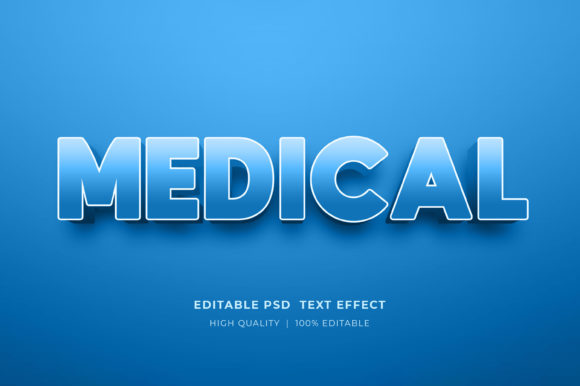
The primary distinction of a Medical 3D Editable Style Text Effect lies in its psychological impact. Standard flat text often fails to convey depth or importance, while overly ornate 3D fonts can appear unprofessional or dated. The medical variant strikes a balance by utilizing clean lines, subtle gradients, and realistic lighting that mimics glass, metal, or polished plastic—materials commonly associated with medical equipment and hygiene.
These effects are typically built within Adobe Photoshop using advanced layering techniques. They are designed to be "smart objects," which means they encapsulate complex styling properties into a single, non-destructive layer. This architecture ensures that the core visual integrity of the 3D effect remains intact regardless of how many times the text is modified. For a researcher or designer evaluating options, this distinction is critical: it separates static, locked designs from dynamic, adaptable assets that grow with your brand needs.
Technical Architecture and Ease of Use
One of the most significant factors in adopting any design template is the learning curve. A well-structured Medical 3D Editable Style Text Effect minimizes technical barriers through intelligent file organization. The workflow is generally straightforward:
- Accessing the Smart Object: Users double-click the designated smart object thumbnail in the layers panel. This action opens a new tab containing the base geometry of the text.
- Text Modification: Within this tab, the Type Tool is selected. The user clicks on the placeholder text and inputs their desired wording.
- Automatic Rendering: Upon saving and closing the smart object tab, the main document automatically updates, applying the 3D shading, bevels, and textures to the new text instantly.
This process eliminates the need for manual re-texturing or rebuilding shadows for every new headline, saving hours of repetitive work. The files are provided in RGB color mode, ensuring compatibility with digital platforms, though high-resolution settings allow for crisp output in print materials as well.
Comparing Approaches: Custom Modeling vs. Template-Based Effects
When creating medical-themed graphics, designers often face a binary choice: invest time in modeling custom 3D text from scratch using software like Blender or Cinema 4D, or utilize pre-made PSD templates. Evaluating the Medical 3D Editable Style Text Effect requires understanding where it sits on this spectrum.
Custom 3D Modeling offers unparalleled control over angles, materials, and lighting. However, it requires specialized skills, expensive hardware, and significant time investment. For a marketing team needing five variations of a flyer for a conference, custom modeling is often inefficient.
Flat Vector Templates are fast and easy to edit but lack the tactile presence that 3D effects provide. In medical advertising, the "weight" of the text can subconsciously signal reliability and stability. Flat text may feel too lightweight for headlines emphasizing critical health information.
The Medical 3D Editable Style Text Effect occupies the optimal middle ground. It provides the visual weight and professional polish of 3D rendering without the steep technical barrier. It is ideal for users who need high-quality visuals but lack expertise in 3D modeling software. The trade-off is a limitation in geometric customization—you cannot easily change the angle of the text or the source of light—but for standard typographic needs, this is a negligible constraint compared to the time saved.
Strategic Applications Across Media Formats
The versatility of these editable text effects extends across multiple media formats. Their structured nature makes them suitable for both digital engagement and physical production. Below are key use cases where this asset class adds distinct value:
- Print Marketing Materials: Flyers, brochures, and banners benefit from the legibility and depth of 3D text. In crowded environments like medical conferences, bold, textured headers stand out against busy backgrounds.
- Digital Advertising: Facebook timelines, website hero banners, and web ads require eye-catching elements that load quickly. These PSD-based effects render cleanly at various screen resolutions, enhancing click-through rates without compromising site speed.
- Product Packaging and POD: For Print-on-Demand (POD) services, such as T-shirt designs or merchandise, 3D text effects add perceived value. A simple logo becomes a premium product feature when rendered with metallic or glossy medical-style finishes.
- Book Covers and KDP Designs: Self-published authors on platforms like Amazon KDP often struggle with cover professionalism. Using a pre-designed 3D text effect can elevate a DIY cover to look like it was commissioned from a top-tier agency, particularly for non-fiction health guides or thrillers set in hospital environments.
- Logo Presentations: When pitching brand identities to clients, presenting a logo in a 3D context helps stakeholders visualize the brand in real-world applications. The editable nature allows for quick adjustments during client meetings.
Evaluating Limitations and Decision Factors
While powerful, no single tool is universally applicable. Before integrating a Medical 3D Editable Style Text Effect into your workflow, consider the following constraints:
File Management and Extraction
These resources are typically distributed in compressed zip formats to reduce download size. Users must extract the files before accessing the PSDs. While this is a minor step, it introduces a dependency on extraction software. Additionally, because the files are organized with multiple layers for transparency and editing, opening them on older versions of Adobe Photoshop may result in compatibility warnings or missing filters. Ensuring your software is up to date is a prerequisite for a smooth experience.
Color Consistency
The effects are usually provided in RGB mode. If your primary output is large-format printing (e.g., billboards), you may need to convert the color profile to CMYK. While modern Photoshop handles this conversion reasonably well, it can sometimes shift bright, neon-like medical blues or greens into duller tones. Designers should preview final proofs carefully to ensure brand colors remain accurate.
Homogeneity Risk
Because these templates are publicly available, there is a risk of visual homogeneity. If multiple competitors in the same niche use the exact same 3D font style, your branding may blend in rather than stand out. To mitigate this, use the editable features to modify secondary elements, such as changing the background texture, adjusting the glow intensity, or combining the text effect with unique photographic overlays.
Conclusion: Is This Resource Right for You?
The decision to use a Medical 3D Editable Style Text Effect depends largely on your resource allocation and design goals. If you are a solo practitioner, a small clinic, or a freelance designer managing tight deadlines, this type of asset offers an excellent return on investment. It bridges the gap between amateur aesthetics and professional polish without requiring extensive training in 3D modeling.
Conversely, if you are building a global brand identity system that requires unique, proprietary typography and lighting models, you may find these templates too limiting. In such cases, investing in custom 3D design services might be more appropriate.
For the majority of projects involving flyers, social media graphics, book covers, and promotional materials, the efficiency and visual impact of editable 3D text effects make them a compelling choice. By leveraging well-organized, smart-object-driven PSD files, creators can produce high-quality, medically themed visuals that resonate with audiences and drive engagement. Always remember to test your final exports across different mediums to ensure the 3D effect translates effectively from screen to print.